Precision Ruby Balls Manufacturing Factory & OEM Supplier
Elite Material Properties of Synthetic Ruby Balls
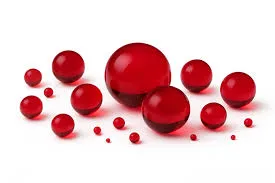
Looking for a reliable ruby balls manufacturing factory? Hengyuan Advanced Materials specializes in the production of ultra-high precision synthetic ruby balls for extreme industrial applications. As a certified precision ruby balls factory, we utilize advanced chemical vapor deposition (CVD) and precision lapping technologies to manufacture precision ruby balls with exceptional sphericity and surface finish, meeting the strictest geometric tolerances of global instrument manufacturers.
Synthetic ruby balls represent the absolute premium echelon of technical crystal components. Second in hardness only to diamond, industrial ruby (Al2O3 doped with Chromium) is the definitive choice for applications where extreme mechanical wear, intense thermal stress, and aggressive chemical exposure make standard glass or metal bearings completely non-viable.
Hengyuan’s high-precision ruby balls are manufactured from premium, optical-grade synthetic ruby crystals, delivering uncompromised technical specifications:
-
Extreme Wear Resistance & Hardness: Rated 9 on the Mohs scale, providing a virtually scratch-proof surface that maintains structural integrity under constant friction.
-
Exceptional Density & Melting Point: Features a robust material density of 3.9 – 4.0 g/cm³ and a melting point at an astonishing 2050°C guaranteeing zero thermal deformation in high-temperature testing environments.
-
Total Chemical Inertness: Unrivaled corrosion resistance against highly concentrated acids, strong alkalis, organic solvents, and corrosive gases.
-
Non-Magnetic & Electrically Insulating: 100% anti-magnetic, making them impervious to electromagnetic interference, a critical trait for precision electronic instrumentation.
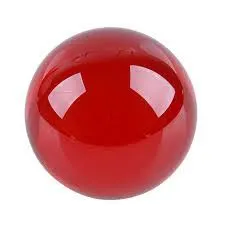
Precision Ruby Balls Specifications & Tolerances
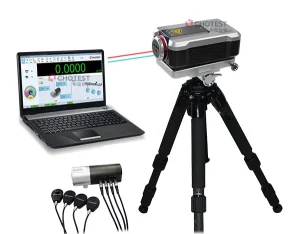
As a dedicated precision ruby balls manufacturing factory, we control the entire process from synthetic raw material selection to micro-lapping and final laser interferometry inspection. This enables us to maintain a stable supply chain, offer direct factory pricing, and customize ball diameters from 0.3mm to over 20mm with tolerances down to Grade 3 or Grade 5.
| Specification | |
|---|---|
| Nominal Ball Diameters | 0.3 – 12 mm |
| Maximum Allowable Deviation from Spherical Form (max) | < 0.08 μm |
| Maximum Allowable Variation of Ball Lot Diameter (max) | < 0.13 μm |
| Maximum Allowable Surface Roughness Ra (max) | < 0.01 μm |
| 100% under microscopic inspection before delivery 100% clean room inspection and packing |
|
| Packing Method: – Clean Vacuum Plastic Bag – Clean Glass Bottle + Plastic Bag – Clean Waffle Tray |
All precision ruby balls shipped from our factory undergo 100% geometric and surface-defect inspections. Material certification (COA) is provided with every batch.
[Get a Free Sample & Factory Quote Within 24 Hours melissa@hyadvancedmaterials.com]
Key Applications & Industry Solutions
-
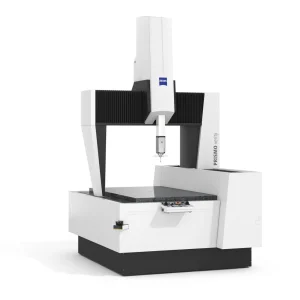
CMM Probes & Metrology Stylus Tips:
Synthetic ruby is the ultimate standard for CMM stylus tips. Its Mohs 9 hardness guarantees zero dimensional wear or flat-spots during continuous scanning of hard metals.
-
High-Pressure Check Valves & Bearings:
Ideal for HPLC pumps, microfluidic valves, and flow meters. Offers total chemical inertness against concentrated acids, non-magnetic stability, and thermal resistance up to 1,000°C.
-
Micro Ruby Ball Lenses:
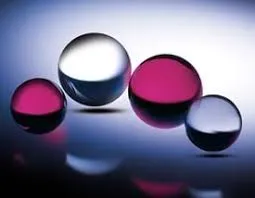
Featuring a high refractive index (n ≈1.76), precision ruby ball lenses excel in optical fiber coupling, laser collimators, and endoscopic imaging.
FAQ About Precision Ruby Balls
Q1: What makes synthetic ruby balls ideal for CMM stylus and measuring probes?
Synthetic ruby balls are the global benchmark for CMM probes and measuring styli due to their extreme hardness and dimensional stability. When a probe repeatedly contacts a workpiece (especially hard metals), any wear on the tip destroys measurement accuracy. Ruby’s Mohs 9 hardness ensures zero flat-spots or dimensional wear over millions of cycles, while its non-magnetic nature prevents electromagnetic attraction to metallic workpieces, ensuring absolute sub-micron measurement reliability.
Q2: What custom precision grades can Hengyuan achieve for industrial ruby spheres?
Leveraging our proprietary single-batch large-quantity grinding and specialized chemical-mechanical polishing (CMP) methods, Hengyuan can deliver high precision ruby balls matching ISO Grade 3 (G3) or Grade 5 (G5) tolerances. This guarantees sub-micron diameter accuracy and an impeccably smooth, mirror-like surface finish, which drastically minimizes friction in chemical check valves and precision bearing assemblies.
Q3: Are there any environments where a ruby ball is NOT recommended?
While ruby balls offer elite resistance to almost all chemical agents, they should generally be avoided in applications handling aluminum or silicon products at extremely high temperatures (1,000°C). Under such specific extreme thermal conditions, ruby (aluminum oxide) can chemically bond or react with the contacting material. For those ultra-specific scenarios, our engineering team at Hengyuan can recommend alternatives such as Silicon Nitride (Si3N4) ceramics or Zirconia (ZrO2) ceramics.
Q4: What makes Monocrystalline Aluminum Oxide (Al2O3) the ultimate material for Hengyuan’s ruby balls?
At the core of every Hengyuan ruby ball lies a premium, engineering-grade material: monocrystalline aluminum oxide (Al2O3), also recognized as synthetic single-crystal corundum.
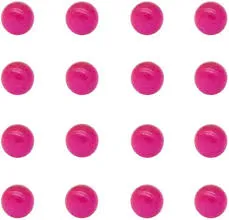
This material represents a highly refined crystal matrix perfected to meet the most stringent industrial metrology and fluid-control standards. The single-crystal structure eliminates grain boundaries, granting the sphere its captivating, translucent jewel-like deep red appearance. This visual clarity and vibrant color—caused by precise traces of chromium ions—are not merely for aesthetics; they serve as a direct testament to the material’s absolute structural purity, zero porosity, and isotropic consistency, ensuring predictable mechanical performance under extreme stress.
Q5: Ruby vs. Sapphire vs. Cubic Zirconia (ZrO2) Balls: How do I choose the right sphere for my blueprint?
Selecting the ideal technical crystal or ceramic ball depends heavily on your specific optical, visual, and operational requirements. Here is a professional breakdown by Hengyuan’s engineering team:
| Material Type | Mohs Hardness | Core Advantages & Optical Trait | Best Fit Application |
| Synthetic Ruby Balls | 9.0 | Deep red color for high visibility; extreme wear resistance; zero grain boundaries. | CMM probes, stylus tips, visual alignment valves, HPLC check valves. |
| Synthetic Sapphire Balls | 9.0 | Chemically identical to ruby but 100% clear and colorless; eliminates color interference. | High-pressure sight glasses, optical lenses, premium fluid check valves. |
| Cubic Zirconia ($ZrO_2$) | 8.0 – 8.5 | High refractive index (n ≈ 1.76); excellent balance of durability and cost-efficiency. | High-index optical lens assemblies, specialized medical pumps. |
-
Ruby vs. Sapphire: Both share the same elite hardness (Mohs 9) and thermal stability. Choose Ruby when you need the operator or automated vision systems to easily track and see the ball (e.g., CMM tips). Choose Sapphire when total light transmittance or zero color distortion is required.
-
Cubic Zirconia Alternative: While highly durable and optically brilliant, Cubic Zirconia (ZrO2) does not match the ultimate mechanical wear life or chemical inertness of premium Ruby or Sapphire.
Q6: Can Hengyuan’s ruby and sapphire balls be utilized in precision optical applications?
Yes, absolutely. Because synthetic ruby and sapphire are forms of monocrystalline aluminum oxide, they possess exceptional optical transparency across a broad spectral range.
Hengyuan’s ruby and sapphire balls feature an ultra-smooth, scratch-free surface finish with high geometric sphericity. This makes them outstanding candidates for specialized optical applications, such as high-pressure focal lenses, endoscope objectives, and light-collimating components, especially in harsh chemical or thermal environments where standard optical glass would degrade or crack.
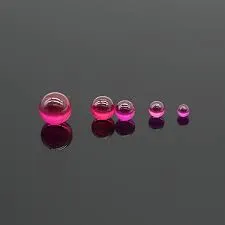
Q7: What technical advantages does Hengyuan offer as a precision ruby balls manufacturing factory?
As a dedicated precision ruby balls manufacturing factory, we control the entire process from synthetic raw material selection to micro-lapping and final laser interferometry inspection. This enables us to maintain a stable supply chain, offer direct factory pricing, and customize ball diameters from 0.3mm to over 20mm with tolerances down to Grade 3 or Grade 5.
| Specification | |
|---|---|
| Nominal Ball Diameters | 0.3 – 12 mm |
| Maximum Allowable Deviation from Spherical Form (max) | < 0.08 μm |
| Maximum Allowable Variation of Ball Lot Diameter (max) | < 0.13 μm |
| Maximum Allowable Surface Roughness Ra (max) | < 0.01 μm |
| 100% under microscopic inspection before delivery 100% clean room inspection and packing |
|
| Packing Method: – Clean Vacuum Plastic Bag – Clean Glass Bottle + Plastic Bag – Clean Waffle Tray |
All precision ruby balls shipped from our factory undergo 100% geometric and surface-defect inspections. Material certification (COA) is provided with every batch.
💡 Engineering Tip: Need a specific diameter or custom tolerance for your ruby ball bearings or ruby ball lens project?
[Get a Free Sample & Factory Quote Within 24 Hours melissa@hyadvancedmaterials.com]