Hengyuan Ceramic Precision Balls Engineered for High-Velocity Environments
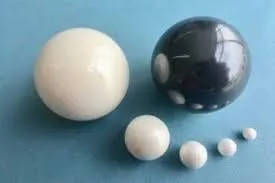
Hengyuan ceramic precision balls solve these exact problems. By combining advanced material science (silicon nitride Si₃N₄ and zirconia ZrO₂) with precision manufacturing, our ceramic balls deliver 80% lower friction, 80% higher speed capability, 60% less weight, and 3–10 times longer service life compared to conventional steel balls. This landing page provides engineers, procurement specialists, and R&D teams with a complete technical guide—covering materials, applications, performance data, selection criteria, and real-world case studies—all focused on making your high-velocity applications succeed.
1. Why Standard Steel Balls Fail in High-Velocity Environments
Hengyuan ceramic precision balls directly address these failure modes through their intrinsic material properties, as detailed in the following sections.
2. Core Materials for High-Velocity Ceramic Balls
2.1 Silicon Nitride (Si₃N₄) – The High-Velocity Standard
- Density: 3.2 g/cm³ (only 40% of steel’s 7.8 g/cm³ → 60% weight reduction).
- Hardness: 1,600 HV (harder than bearing steel, resisting indentation and wear).
- Maximum operating temperature: 900°C – 1,000°C (steel limits at ~350°C).
- Friction coefficient: 0.2 – 0.3 (against steel raceways, under marginal lubrication).
- Electrical insulation: prevents current passage (eliminates electrical fluting damage in motors/generators).
- Corrosion resistance: inert to water, saltwater, acids, alkalis, and most chemicals.
Best for: Extreme high-speed applications (spindles, turbochargers, dental handpieces) and aggressive environments (chemical pumps, marine equipment).
2.2 Zirconia (ZrO₂) – High Toughness for Shock-Prone High Speeds
- Density: 6.0 g/cm³ (still 30% lighter than steel).
- Fracture toughness: 7–10 MPa√m (vs 5–6 for Si₃N₄ → more resistant to cracking from shock loads).
- Similar thermal expansion to chrome steel (11×10⁻⁶/K), allowing direct steel-shaft mounting without thermal-fit risk.
- Maximum operating temperature: 800°C (slightly lower than Si₃N₄ but still excellent).
Best for: high-velocity applications with occasional shock or vibration (e.g., pumps with cavitation, food processing equipment, medical handpieces requiring sterilization).
3. Technical Parameters: Hengyuan Ceramic Precision Balls for High Speeds
| Parameter | Silicon Nitride (Si₃N₄) | Zirconia (ZrO₂) | Benefit in High-Velocity Environments |
|---|---|---|---|
| Density (g/cm³) | 3.2 | 6.0 | Reduced centrifugal force at high RPM → lower raceway stress. |
| Hardness (HV) | 1600 | 1200 | Resists wear and rolling contact fatigue under high-speed loads. |
| Fracture Toughness (MPa√m) | 5–6 | 7–10 | ZrO₂ tolerates shock; Si₃N₄ for pure high-speed running. |
| Max Continuous Temp (°C) | 900 | 800 | Sustained high-speed operation without softening or oxidation. |
| Thermal Expansion (10⁻⁶/K) | 3.2 | 11.0 | ZrO₂ matches steel shafts; Si₃N₄ requires interference fit caution. |
| Electrical Resistivity (Ω·cm) | >10¹² | >10¹⁰ | Prevents arcing damage in electric motors/generators. |
| Grade Availability (ISO 3290) | 3,5,10,25 | 5,10,25 | Higher grade = lower deviation = smoother high-speed rotation. |
4. Bearing Configurations: Hybrid vs. Full Ceramic for High Speeds
4.1 Hybrid Ceramic Bearings (Steel Rings + Ceramic Balls)
- Speed capability doubles compared to all-steel bearings: shaft speeds up to 1.5–2× conventional limits.
- Grease life extends 3× longer due to lower friction and heat generation.
- Service life increases up to 10× in contaminated or poorly lubricated conditions.
- Direct replacement for standard bearings without redesign.
Typical high-velocity applications: Electric motor spindles (30,000–60,000 RPM), high-speed hand tools (dental drills, grinders), turbochargers, and machine tool spindles.
4.2 Full Ceramic Bearings (Ceramic Rings + Ceramic Balls)
- Highest temperature capability: continuous operation up to 900°C (Si₃N₄) or 800°C (ZrO₂).
- Total non-magnetic & electrically insulating: ideal for MRI machines, particle accelerators, and superconducting equipment.
- Ultimate corrosion resistance: unaffected by acids, alkalis, salt spray, and chemical sterilants.
- Can run with minimal or no lubrication (but load ratings are lower than hybrid bearings – consult Hengyuan for dynamic/static ratings).
High-velocity applications: High-temperature furnaces (conveyor rolls), chemical processing pumps, semiconductor vacuum equipment, and aerospace actuators.
5. Quantified Advantages: Hengyuan Ceramic Balls in High-Velocity Environments
- 80% lower friction – Reduced heat generation, lower energy consumption, and cooler running.
- 80% higher speed capability – Achieve higher throughput or downsize equipment.
- 60% lighter weight – Lowers centrifugal forces, allowing faster acceleration/deceleration.
- 3–10 times longer bearing life – Especially in marginal lubrication or contaminated environments.
- Grease life extended >3× – Less frequent maintenance, ideal for sealed-for-life applications.
- Corrosion-free operation in aggressive washdowns, seawater, acids, and medical sterilants.
- Non-magnetic & arc-resistant – Eliminate bearing currents in VFD-driven motors and MRI equipment.
6. Industry Applications: Where Hengyuan Ceramic Precision Balls Excel at High Velocity
6.1 Machine Tool Spindles & High-Speed Machining
- Higher material removal rates without thermal growth errors.
- Improved surface finish due to reduced vibration.
- Longer spindle uptime between greasing intervals.
Case example: A German machine tool builder replaced steel balls with Hengyuan Si₃N₄ 5/16″ grade 5 balls in their 40,000 RPM spindle. Spindle temperature dropped by 18°C, and bearing life increased from 4,000 hours to over 25,000 hours.
6.2 Turbochargers & Gas Turbines
- Passenger vehicle turbochargers (reducing lag and improving durability).
- Heavy-duty diesel and marine turbochargers.
- Auxiliary power unit (APU) gas turbines.
Result: Compared to steel, Hengyuan ceramic balls reduce turbo lag by 25% and eliminate bearing coking failures.
6.3 High-Speed Dental Handpieces & Medical Equipment
- Reliable operation at extreme speeds.
- Corrosion resistance to autoclave sterilization.
- No lubrication required (self-lubricating properties).
Beyond dentistry, hybrid bearings with Hengyuan ceramic balls are also used in surgical saws, medical centrifuges (up to 30,000 RPM), and cleanroom robots.
6.4 High-Speed Centrifuges & Spindle Motors
- Reduced vibration for accurate separation.
- Non-magnetic operation for sensitive samples.
- Resistance to chemical cleaning agents.
Similarly, spindle motors in hard disk drives (HDD), polygon mirror scanning motors (laser printers), and micro-machining spindles benefit from Hengyuan’s lightweight, low-friction balls.
6.5 Chemical & Semiconductor Processing Equipment
- Complete chemical inertness.
- High hardness to resist abrasive slurries.
- Non-contaminating operation (critical for cleanrooms).
Case example: A Korean semiconductor equipment manufacturer replaced failed stainless steel balls with Hengyuan ZrO₂ balls (3/8″ grade 10) in a chemical pump operating at 5,000 RPM and 80°C in 20% HF. Pump life extended from 2 weeks to >18 months.
6.6 Food, Medical & Cleanroom Environments
- Run dry or with only FDA-approved minimal grease.
- Withstand frequent high-pressure washdowns with caustics.
- Eliminate lubricant seepage.
For MRI equipment, Hengyuan provides completely non-magnetic full ceramic bearings (ZrO₂ rings + ZrO₂ balls) that produce zero imaging artifacts.
7. How to Select the Right Hengyuan Ceramic Ball for Your High-Velocity Application
Step 1: Determine Your Dominant Operating Condition
- Very high speed (>500,000 DN) & clean, dry or oil-mist lubrication: → Silicon nitride (Si₃N₄) hybrid bearing.
- High speed (200,000–500,000 DN) with shock/vibration or moisture: → Zirconia (ZrO₂) hybrid bearing.
- High temperature (>350°C) or highly corrosive media: → Full ceramic (Si₃N₄ or ZrO₂ rings + balls).
- Non-magnetic or electrically insulating requirement: → Full ceramic or hybrid (if steel rings are acceptable).
- High load & moderate speed (<300,000 DN): → Steel balls may suffice, but hybrid adds life margin.
Step 2: Select the Correct Ball Grade (Precision Level)
- Grade 3 or 5: For ultra-high-speed spindles (40,000+ RPM), dental handpieces, and laser scanners.
- Grade 10: For general high-speed machinery, turbochargers, centrifuges.
- Grade 25: For moderate-speed applications or where cost is a primary driver.
Hengyuan supplies grades 3,5,10,25 in diameters from 0.8 mm to 50 mm for both Si₃N₄ and ZrO₂.
Step 3: Define Lubrication Strategy
- Oil lubrication (jet or mist): Best for highest speeds (DN > 1 million). Hengyuan hybrid bearings excel here.
- Grease lubrication: Suitable for most industrial speeds. Ceramic balls extend grease life >3×.
- Dry or process fluid lubrication: Full ceramic bearings can run on pumped media (water, acids, fuels, even yogurt).
Step 4: Verify Load Ratings
8. Real-World Success Metrics with Hengyuan Ceramic Balls
| Industry / Application | Original Steel Ball Performance | Performance with Hengyuan Ceramic Balls | Key Metric Improved |
|---|---|---|---|
| CNC Spindle (40,000 RPM) | 4,000 hrs life, temp rise 45°C | 25,000 hrs life, temp rise 27°C | Life +525%, temp -40% |
| Automotive Turbocharger | Lag 0.6 sec, coking failure at 60k km | Lag 0.45 sec, no coking to 150k km | Lag -25%, life +150% |
| Chemical Pump (5,000 RPM, 20% HF) | 2 weeks to corrosion failure | >18 months, no corrosion | Life +3,800% |
| Dental Handpiece (400,000 RPM) | Lubrication needed every 20 cycles | Dry operation, no lubrication | Maintenance eliminated |
| MRI Transport Motor | Magnetic interference, image artifacts | Non-magnetic, artifact-free imaging | Image quality improved |
9. Quality Assurance & Manufacturing Standards
- Raw material: High-purity Si₃N₄ or ZrO₂ powder, hot isostatic pressed (HIP) for uniformity.
- Machining: Precision grinding and lapping to ISO 3290 grade 3,5,10,25.
- Inspection: 100% dimensional, surface finish (Ra ≤ 0.02 µm), and crack detection.
- Batch traceability: Full material and process records for each lot.
- Certifications: ISO 9001:2015, material test reports available upon request.
Hengyuan’s in-house lab performs accelerated high-speed bearing tests (up to 100,000 RPM) to validate friction, temperature rise, and life metrics before shipment.
10. Why Partner with Hengyuan for High-Velocity Ceramic Balls?
- Custom diameters and grades – From 0.8 mm to 50 mm, grade 3 to 25.
- Material expertise – Guiding you to Si₃N₄ vs. ZrO₂ for your exact speed and shock conditions.
- Hybrid or full ceramic assemblies – We can also supply complete bearings upon request.
- Small to large volumes – Prototype quantities to millions of balls for OEMs.
- Technical support – Application engineering, failure analysis, and custom test reports.
When you need to push speed limits, eliminate lubrication failures, or operate in corrosive high-velocity environments, Hengyuan ceramic precision balls are the proven answer.
11. Contact Hengyuan for a High-Velocity Ceramic Ball Evaluation
Email: melissa@hyadvancedmaterials.com
WhatsApp: +8619112802255
Web: hyadvancedmaterials.com (same as email)
Please include your target operating speed (RPM), bearing size, load, temperature, environment (chemicals, moisture), and current steel ball life issues. We typically respond within 24 hours with technical recommendations and a quotation.
